Palazzo Barberini, Rome
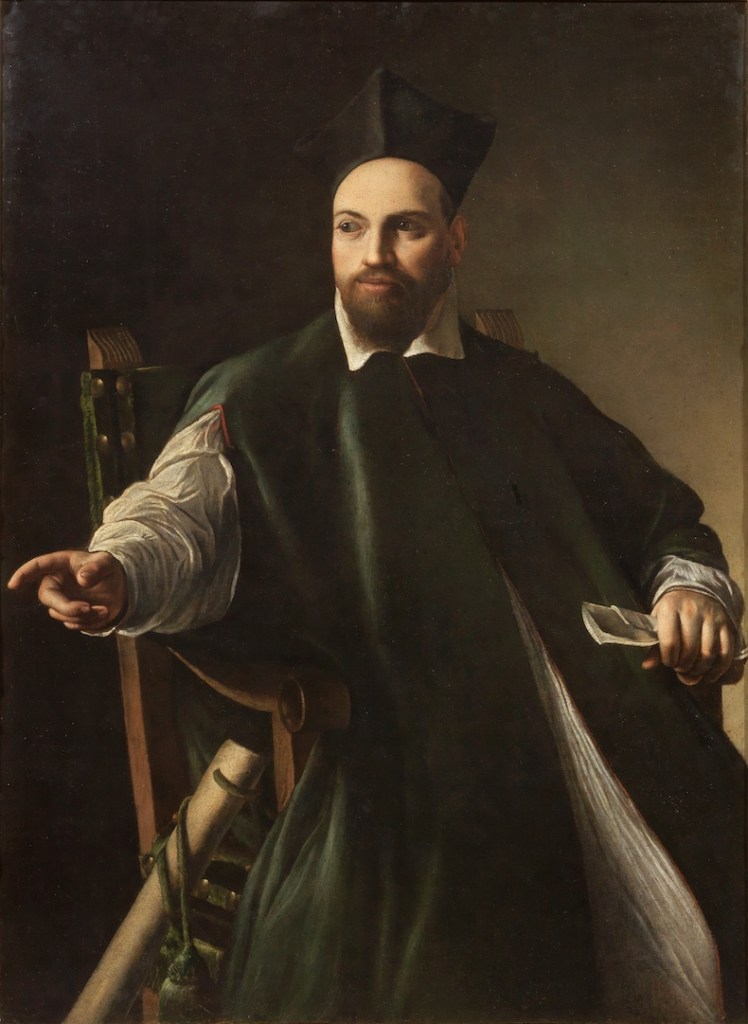
Portrait of Monsignor Maffeo Barberini (c. 1598–99), Caravaggio
The Italian ministry of culture acquired a portrait by Caravaggio for €30m – one of the largest sums it has ever spent on a work of art. The work – one of only three known portraits by the painter still in existence – depicts Maffeo Barberini, later Pope Urban VIII, at the age of around 30, and was identified as a Caravaggio by the art historian Roberto Longhi in the 1960s. It reportedly took more than a year of negotiations to prise the work from the private collection in which it had been held for decades. The painting has been assigned to the Palazzo Barberini, which was commissioned by Maffeo Barberini in the 1620s and today holds several of the artist’s most celebrated works. The move is part of a concerted campaign to buy masterpieces of Italian art for the nation.
Art Institute of Chicago
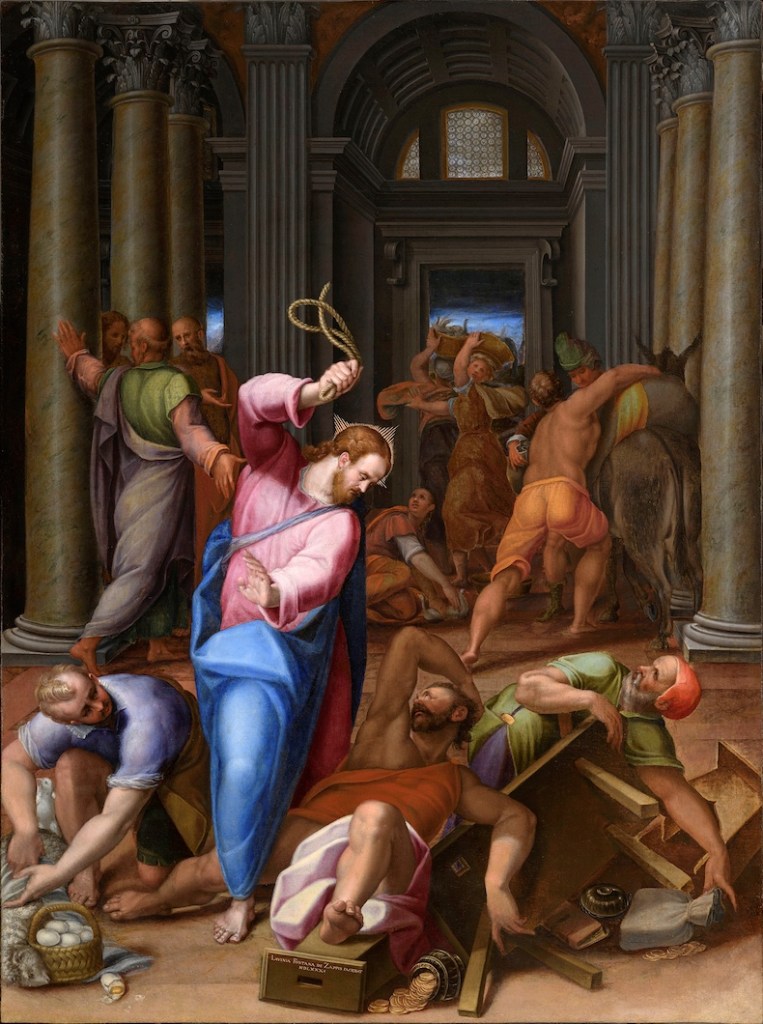
Christ Driving the Traders from the Temple (1580), Lavinia Fontana
Lavinia Fontana was born in Bologna in 1552, studied under her father, Prospero Fontana, and was a studio assistant to Giorgio Vasari, before embarking on a full-time career as a painter and becoming possibly the first professional woman artist in western Europe. The Art Institute of Chicago has now acquired its first work by Fontana, Christ Driving the Traders from the Temple (1580), which was recently restored and presented by Trinity Fine Art at TEFAF Maastricht. It was painted when Fontana was in her twenties and therefore offers an insight into her early development as an artist. It is one of the few surviving works by Fontana to show the influence of Michelangelo – specifically the drawings produced by the master in the 1540s on the same subject, now lost but known through a painted copy by Marcello Venusti, now in the National Gallery in London.
National Etruscan Museum of Villa Giulia, Rome
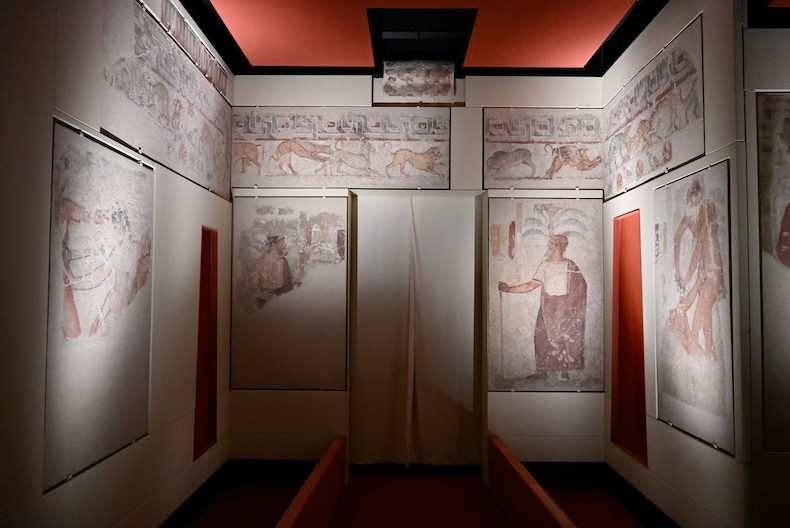
François Tomb frescoes
The François Tomb was discovered in 1857 by the archaeologists Alessandro François and Adolphe Noël des Vergers, in a necropolis in the Etruscan city of Vulci. It dates to the fourth century BC and the frescoes painted on the tomb, which depict scenes from Greek mythology and Etruscan history, are considered among the most important surviving pieces of Etruscan art. The frescoes were removed by Prince Torlonia in 1862 and have until now been owned by the family. The Italian government first attempted to purchase them in 1921 but have only now succeeded: they were bought for €15m and given to the National Etruscan Museum of Villa Giulia.
The Frick Collection
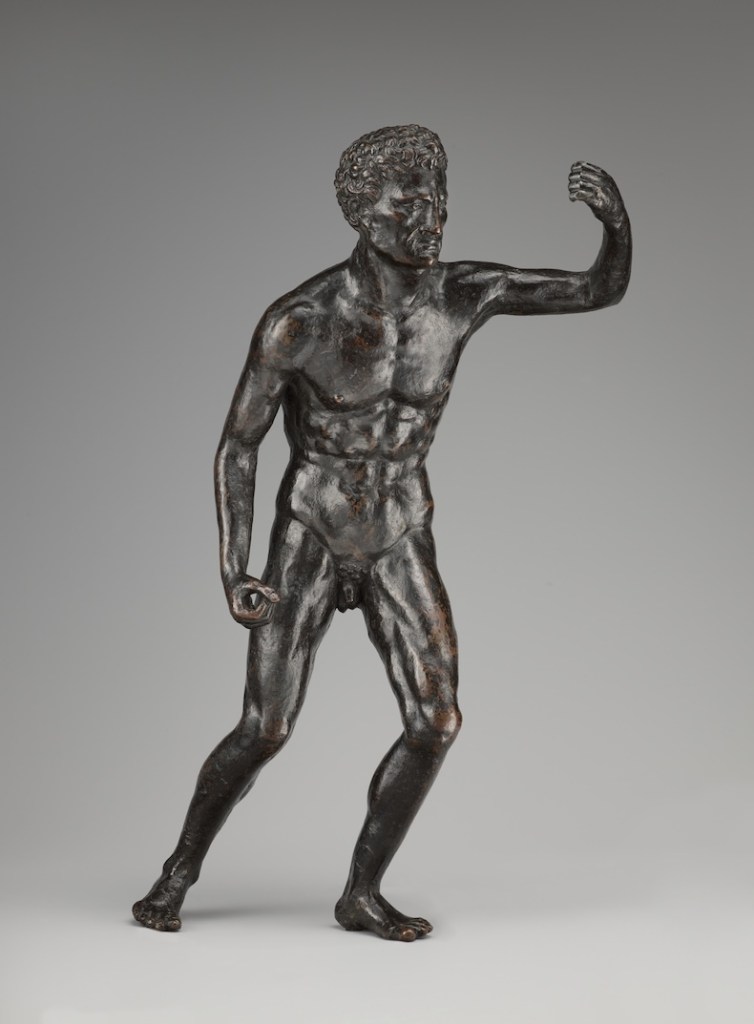
Warrior (c. 1513–20), Andrea Briosco aka Riccio
The Frick has acquired a masterpiece of 16th-century sculpture, a gift from the businessman William von Mueffling and his wife, the journalist Clémence von Mueffling. Warrior was crafted in the 1510s by Andrea Briosco, known as Riccio, who also produced one of the Frick’s best-loved pieces of decorative art, an ornate bronze oil lamp of c. 1516–24. Warrior is 30cm tall and shows a nude fighter charging into battle; originally the figure held a sword and shield but those have since been lost.
Metropolitan Museum of Art, New York
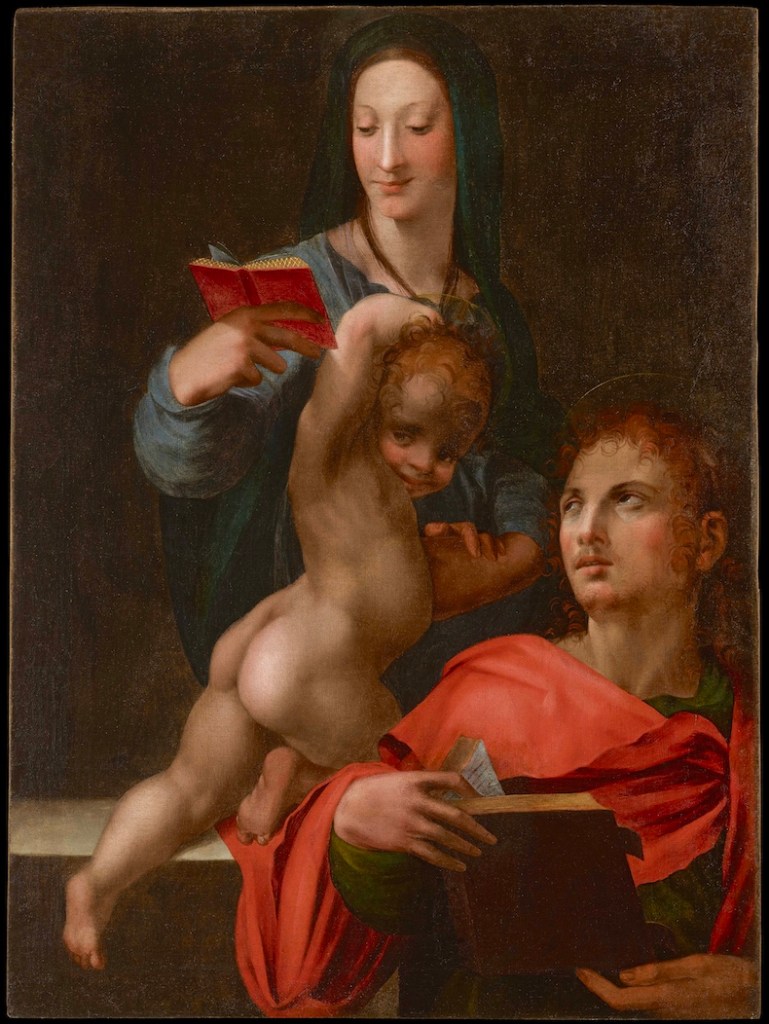
Madonna and Child with Saint John the Evangelist (1512/13), Rosso Fiorentino
In Lives of the Artists, Vasari recorded Rosso Fiorentino’s first major commission, a fresco of the Assumption of the Virgin in the courtyard of the Basilica of the Santissima Annunziata in Florence. It was ‘a painting of the Madonna and Child with a half-length figure of Saint John the Evangelist’, Vasari wrote, that got the Mannerist painter the commission. It was thought to have been lost or destroyed, until recent conservation work on a painting in London of the Madonna and Child revealed the figure of Saint John the Evangelist on the right of the canvas, which had for centuries been obscured by overpainting. Until now, the work has been dated to around 1520, but this discovery confirms the painting as the same one Vasari described, and can be dated to 1512 or 1513, before the creation of the Annunziata fresco. The Met now owns the earliest work securely attributed to the artist.
Neue Galerie, New York
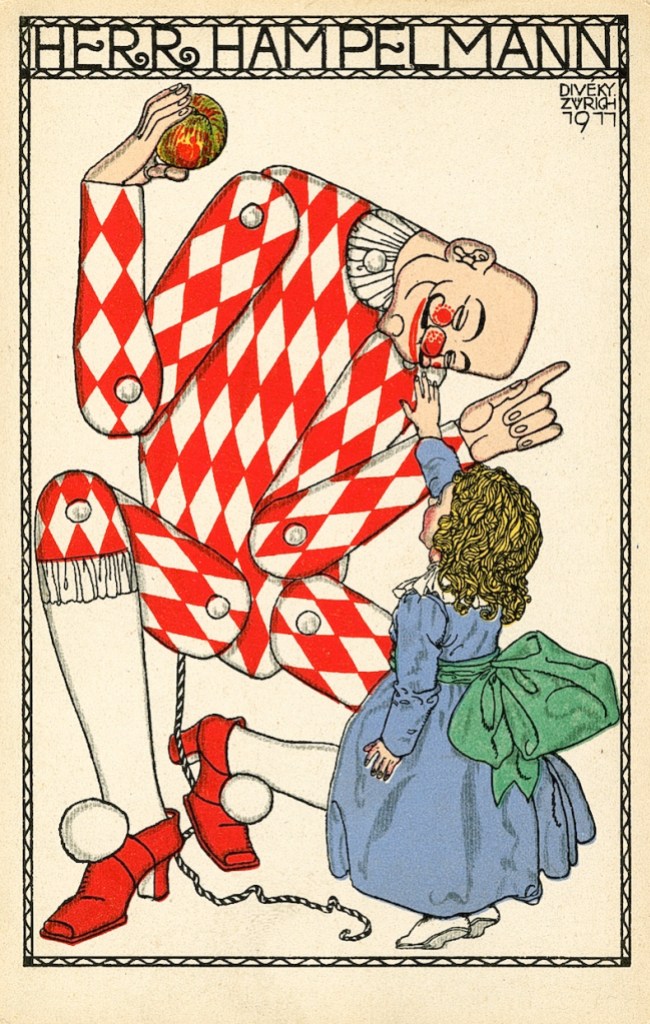
More than 1,000 postcards produced by the Wiener Werkstätte
In 1907 the Wiener Werkstätte, which from 1903–32 produced some of the most thrilling and skilfully designed pieces of decorative art anywhere in Europe, capitalised on a craze for sending postcards by producing its own series. Although millions were printed, nowadays many of the designs are rare and coveted by collectors. The late Leonard Lauder, whose brother Ronald founded the Neue Galerie in 2001, collected thousands of these postcards, which are full of colour and visual inventiveness, and the museum has now announced a gift from his estate of more than 1,000. Some of the postcards are currently on display at the Jewish Museum as part of its exhibition about the women who worked at the workshop, but many will be included in the Neue Galerie’s exhibition celebrating its 25th anniversary later this year.
Princeton University Art Museum
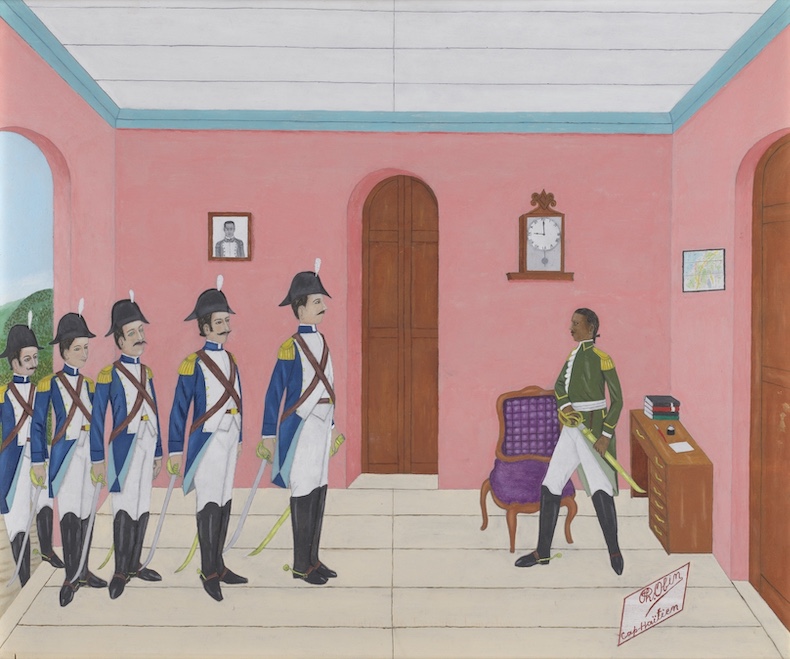
Thirty-four paintings by 20th-century Haitian artists
The art collector Kay Heller grew interested in Haitian art in the 1980s, when she worked in a mission hospital in Limbé in the north of the country. Since then she and her husband, J. Roderick Heller, have built up an enviable collection of mostly 20th-century Haitian art, much of which they have donated to museums including the National Gallery of Art in Washington, D.C., and the Tampa Museum of Art. The couple have chosen J. Roderick’s alma mater, Princeton University, as the recipient of their latest donation, a group of 34 paintings by Haitian artists mostly associated with the Centre d’Art in Port-au-Prince, which has trained, supported and exhibited artists since it was established in 1944. Highlights include three paintings by Rigaud Benoit, an early member of the Centre d’Art and one of Haiti’s most beloved painters, and a work by Philomé Obin depicting the arrest of Toussaint L’Ouverture, the hero of the Haitian Revolution, by the French authorities in 1802.
Städel Museum, Frankfurt
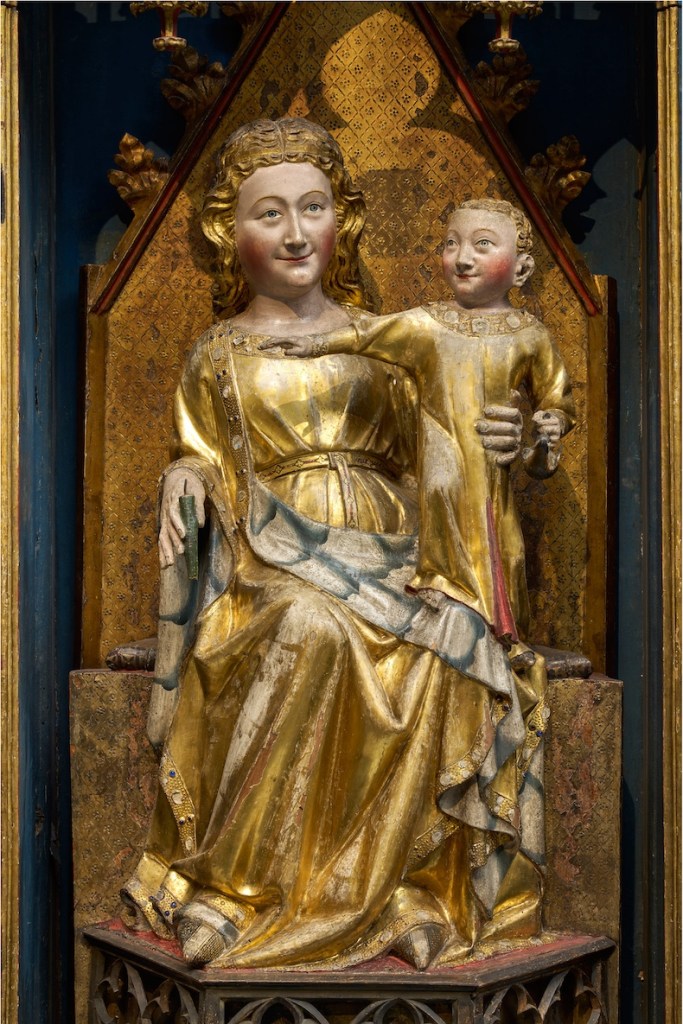
Altenberg Madonna (c. 1320–30), Köln
The Altenberg Altar, produced for the abbey church in Altenberg, Hesse, in the early 14th century, is one of the earliest surviving examples of the ‘convertible’ altarpieces that gained popularity in the late 13th century. The painted wings of the altar were acquired by the Städel in 1925 and are the oldest examples of German painting in the museum. The original shrine is also held in the museum, on permanent loan from the Braunfels Castle museum, but the centrepiece, an exceptionally well-preserved painted wood Madonna and Child Enthroned that was produced in Köln in c. 1320–30, has been in private hands. The Städel’s purchase of this masterpiece of gothic sculpture allows the whole altarpiece to be displayed as it was in the medieval period and has been described by the Städel as one of the most important sculpture acquisitions in the history of the museum.
The winner will be announced on 19 November.
The Shortlists | Artist of the Year | Museum Opening of the Year | Exhibition of the Year | Book of the Year | Acquisition of the Year